Wednesday, July 26, 2006

A Musica De Briamonte

José Briamonte - Sambeco, A Musica De Briamonte RCA Victor BBL-1449 (1968)

Probably the rarest LP by this legendary songwriter, arranger & pianist. His talents often grace the grooviest sixties' bossa releases and this album is no exception.

Joined by the likes of Papudinho on trumpet, Raulzinho on trombone, Heraldo do Monte on acoustic guitar, Capacete & Guará on acoustic bass, Garoto on vibes, Chacau & Heitor on drums & percussion and Boneca on acoustic guitar.

Whether it's tight snapping jazz instrumentals or groovy bossa vocals, each tune is propelled in Briamonte's trademark swinging fashion - and with songs penned by Alan & Marilyn Bergman, Quincy Jones, João Donato, Luiz Carlos Vinhas, Milton Nascimento & Johnny Alf, as well as Briamonte himself, it's a great listen all the way through!

1) Roda De Samba
2) Selva
3) Moça
4) The World Goes On
5) Canto Pra Amada
6) Eu E A Brisa
7) Mr. King
8) Travessia
9) Watch What Happens
10) Januaria
11) Sonho Bom
12) Ye Me Le

Wednesday, July 12, 2006

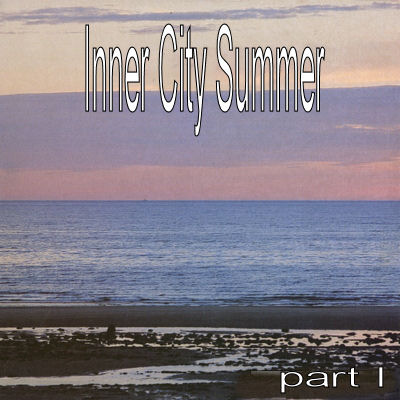
Inner City Summer

Here's a compilation of lesser known summery jazz fusion tunes all taken from the U.S. Inner City label and are of a late seventies vintage. I did this one for personal consumption but thought you might enjoy it, so here it is with suitable cover art.

If there are enough takers, I'll post the second volume at a later date.

1) Sam Morrison - Song Of Landa
2) Arn Evans + Tradewinds - Song For The Changing Seasons
3) Jeff Lorber Fusion - Chinese Medicinal Herbs
4) Listen Featuring Mel Martin - Growing
5) Dry Jack - Heads In The Cloud
6) Solar Plexus - The Darwin Dilemma
7) Bert Ligon - River Journey
8) Didier Lockwood - Aspiring Answer
9) Cybill Shepherd - Triste
10) Kellis Ethridge - Pensacola Joy
11) Arni Egilsson - Hot Air On A G String

Monday, July 03, 2006

Guitarra Cósmica


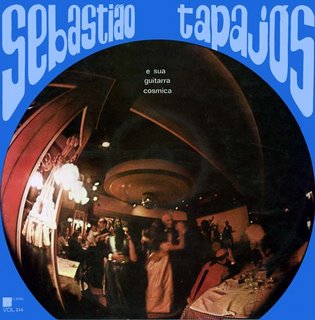
Sebastião Tapajós - ... E Sua Guitarra Cósmica Forma VDL-114 (1969)

Sebastião Tapajós is a renowned Brazilian musician with over 50 recorded albums. A classically-trained violonista (acoustic guitar player), he soon awakened to his own musical expression, which bridges the gap between the rich Brazilian tradition and the delicacy, subtlety, and sophistication of the classical tradition. He received more than 20 awards in his career, including Germany's Album of the Year. Touring intensively through Europe, he has played and recorded with Gerry Mulligan, Astor Piazzolla, Oscar Peterson, Paquito de Rivera, Zimbo Trio, Hermeto Pascoal, and many others, with concerts attended by more than 600,000 people.

His father, who was his first teacher, prompted him to begin playing at nine. He continued to study as a self-taught, until he moved to Belém, in Pará, Brazil, studying musical theory with Professor Drago. In 1963, he moved again, this time to Rio, where he studied with Othon Salleiro. In 1964, he moved to Portugal, where he graduated from the Lisbon National Music Conservatory. Tapajós was already an active performing artist, performing concerts in Portugal and Spain. In Madrid, he studied with guitar master Emilio Pujol, having graduated from the Hispanic Culture Institute. Since 1968, his recordings have been released in Brazil, Argentina, Japan, and in most European countries. Returning to Belém, he spent some time there before moving again to Rio, in search of performing opportunities and at the same time researching Brazilian popular music. The first opportunity to perform came with a rendition of Villa-Lobos' "Concerto for Guitar and Orchestra," together with National Symphonic Orchestra, at the Teatro Municipal, Rio's most distinguished classical music concert house. The critics were very favorable, and he began to tour Brazil and the U.S., giving concerts. By and by, Tapajós began to demonstrate interest in writing Brazilian popular music. His compositions, always evidencing an original character while avoiding easy commercial references, are profoundly rooted in Brazilian tradition. In 1972, his Brasil/El Arte de la Guitarra was released by Discmedia/Trova-Alfa, with themes from classical and popular Brazilian composers, and his own compositions, together with a Weiss piece, "Allemande." After 1973, he toured Europe with great success. In that same year, he performed at the Folklore and Bossa Nova of Brazil Festival, accompanying Maria Betânia and Paulinho da Viola, and he recorded Bienvenido Tapajós for MPS. He then began an intense touring schedule through Germany, Austria, Denmark, Norway, Italy, Holland, Belgium, and other countries. He also makes a point in presenting to his European audiences other great Brazilian musicians, such as Maurício Einhorn, Zimbo Trio, Joel do Bandolim, Djalma Correa, Sivuca, and others.

In 1981, Sebastião Tapajós recorded with Zimbo Trio the album Sincopando, for Stockfisch. In 1982, his LP Guitarra Criolla was awarded, in Germany, as the Album of the Year. Two years later, he released Xingu, with Pedro "Sorongo" Santos and Djalma Correa, through Tropical Music. His LP Terra was also awarded as Best Foreign Album in Germany. In 1988, Sebastião Tapajós recorded Luá, Joá, with Maurício Einhorn, for Caju Music. In Brazil, he was awarded by the Academia Brasileira de Letras as the best Brazilian musician of 1992. In 1993, he recorded a CD entirely dedicated to Villa-Lobos' music, Villa-Lobos, for L'Art. In 1994, also for L'Art, he recorded another album with pieces mostly by Hispanic classical composers. But, in 1995, his Visões do Nordeste (L'Art) brought his own compositions with Northeast Brazilian rhythms; with only one song not written by him, the Northeastern folklore song, "Mulher Rendeira." With Brazilian pianist Gilson Peranzzetta, Tapajós recorded, in 1996, the album Affinities, mostly with compositions by the two. Rejecting being labeled as a "jazz" player, Sebastião Tapajós is simply a Brazilian music player.

1) Light My Fire
2) Rio Das Ostras
3) A Estrela E O Astronauta
4) Call Me
5) Luar Em Veropeso
6) Eu Quase Sozinho
7) Cantiga De Errante
8) A 200 P.H.
9) Zazueira
10) Wave
11) Sinhazinha
12) La Mentira

Wednesday, June 21, 2006

Paz

Paz - Kandeen Love Song Spotlite SPJ-507 (1977)

In 1974 keyboard player Geoff Castle joined Latin fusion band PAZ and started a Sunday night residency at the Kensington pub in Holland Park, which ran for 8 years. The band, led by the late Dick Crouch, who wrote most of the material, built a huge following and in 1976 recorded the first of many BBC broadcasts. The band’s first album “Kandeen Love Song”, issued on Spotlite Records in 1977, quickly became popular on the club scene.

The first side was recoreded in 1976, when Brian Smith was the main melodist, playing soprano & tenor saxes and some flute. By 1977 when the three beautiful tracks on the second side were made, Ray Warleigh had taken over on soprano & tenor saxes, but on this album concentrates on piccolo in superb fashion.

Stay awhile on that second side. On it you will hear the title track, a long leisurely rhapsodic piece heavily featuring the flute. Should you marvel at the length of Ray Warleigh's lines, as he elegantly spins improvisations, then that's because he is using cyclic breathing - in through the nose and out through the mouth at the same time, to sustain the phrasing - just like Roland Kirk. Incidentally, the theme of Kandeen Love Song is thousands of years old, a tune which so seized Dick Crouch when BBC producer Angela Bond sang it to him that he added the chords.

Another unique point about this album: Ron Matthewson , probably recognised as the leader on his instrument in Britain, plays bass guitar with Paz , wheras he usually uses string bass. It could well be the first time he's ever been recorded playing bass guitar.

There's also a contrast between the first and second sides. Even though you'd rarely realise it, the 1977 tracks are played totally "free", but the good sense and feeling of the musicians disguises the fact almost completely.

Dick Crouch wrote Crotales (means "strings of bells") and The Bell Tree on the first side - on both of them there's glorious resonant bass from Matthewson. Solar Wind is the keyboardist's, Geoff Castle, who comes from the very rich background of the National Youth Jazz Orchestra, Graham Collier and Nucleus. Yours Is The Light is from Santana's repertoire, a most melodic and exhilarating version.

Listen to Warleigh's stratospheric piccolo on both The Buddha and Time Stood Still, two peices which show how relentlessly the band continue to move forward in ideas, execution and taste.

(Side One)
Brian Smith - soprano, flute; Geoff Castle - keyboards; Phil Lee - electric guitar; Ron Matthewson - bass guitar; Dick Crouch - Electravibe, percussion; Dave Sheen - drums; Simon Morton - congas
Recorded in London - Tuesday 18th May, 1976.

(Side Two)
Ray Warleigh - piccolo, flute, alto flute; Geoff Castle - keyboards, synthesizer; Phil Lee - electric guitar; Ron Matthewson - bass guitar; Dave Sheen - drums; Chris Fletcher - congas; Dick Crouch & Simon Morton - percussion
Recorded in London - Saturday 25th June, 1977.

1) Crotales
2) Solar Wind
3) The Bell Tree
4) Yours Is The Light
5) The Buddha
6) Time Stood Still
7) Kandeen Love Song

Tuesday, June 13, 2006

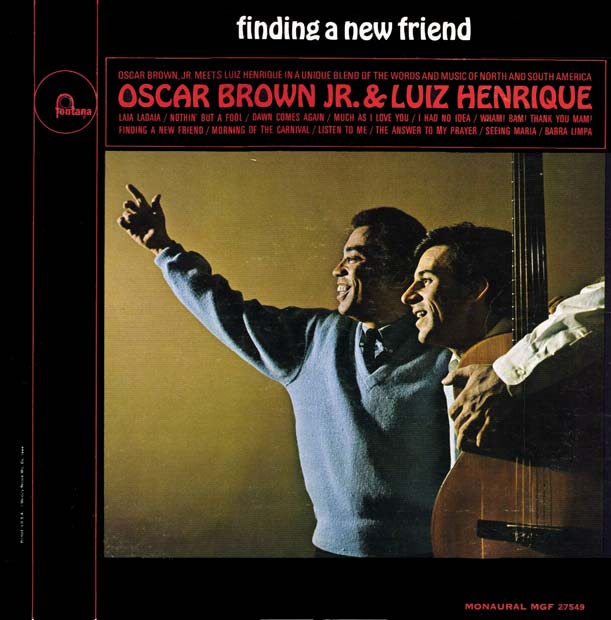
Oscar Brown Jr. & Luiz Henrique

Oscar Brown Jr. & Luiz Henrique - Finding A New Friend Fontana SRF-67549 (1966)

Here's two artists who need no introduction. A rare coming-together by these great vocalists and friends who met at Greenwich Village's Cafe Au Go Go in August 1965. If truth be told, Brown's sly, sardonic vocal style isn't an exact fit for bossa nova; he has to rein himself in for this subtle, almost whispering idiom. But then, the songwriting collaboration works surprisingly well, mostly leaning toward a romantic bossa style, but occasionally hearkening back to Brown's North American hipster persona. And they wander off the territory altogether with Brown's playfully racy bossa calypso, "Wham! Bam! Thank You Mam!".

The album also includes a few Brazilian standards as appetizers before the collaboration begins in earnest. The multi-talented Brazilian Santa Claus, Sivuca, is responsible for three of the soft-focused arrangements, while Henrique takes charge of the rest.

1) Laia Ladaia
2) Nothin' But A Fool
3) Manha De Carnaval
4) Much As I Love You
5) I Had No Idea
6) Wham! Bam! Thank You Ma'm!
7) Finding A New Friend
8) Dawn Comes Again
9) Listen To Me
10) The Answer To My Prayer
11) Seeing Maria
12) Barra Limpa

Tuesday, June 06, 2006

Na Trilha De Osmar Milito

Osmar Milito - Na Trilha De Osmar Milito SOMA 409.6002 (1974)

Noted pianist Osmar Milito is owner of a strong harmonic sense, and has collaborated with amongst others Liza Minelli, Sammy Davis Jr., Pat Metheny, Cláudio Roditi, Hendrik Meurkens, Tony Bennett, Sarah Vaughan, Benny Golson, Spanky Wilson, Mark Murphy and Hermeto Pascoal.

Brother of Hélcio Milito (from the Tamba Trio), Osmar became a professional in 1964, backing Elis Regina, Silvinha Telles, Leny Andrade, Nara Leão, Paulo Moura, Edison Machado, Maria Bethânia, Gilberto Gil, Vinicius de Moraes, and Jorge Ben. After spending a season in Mexico, Milito settled in the U.S. for two years, during which he accompanied Sergio Mendes. Returning to Brazil in the '70s, Milito continued to work with top MPB artists such as Chico Buarque, Ivan Lins, and Nana Caymmi, and instrumental musicians such as Pascoal Meirelles, Márcio Montarroyos, Mauro Senise, and Paulinho da Costa.

I was going to post an individual film score by Milito but this fine album sports tunes taken from several Brasilian Novelas or soundtracks of which he recorded many and ably demonstrates the man's knack for penning hip, catchy and soulful bossas.

1) As Moças (Carinhoso)
2) Encabulada (O Primeiro Amor)
3) Hey Shazam (O Primeiro Amor)
4) Mandato (Selva de Pedra)
5) Corpo Sano Em Mente Sã (Selva de Pedra)
6) O Bofe (O Bofe - Abertura)
7) América Latina (Selva de Pedra)
8) Porcelana, Vidro e Louça (O Bofe)
9) O Primeiro Amor (O Primeiro Amor -Abertura)
10) Podes Crer (O Primeiro Amor)
11) Vou Disparar (O Primeiro Amor)

Tuesday, May 30, 2006

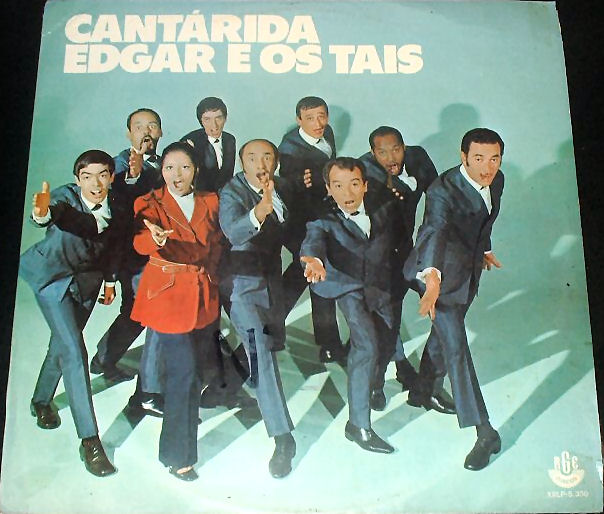
Edgar e Os Tais

Edgar e Os Tais - Cantárida RGE XRLP-5.350 (1970)

Great jazzy vocal bossa led and arranged by Edgar Gianullo and supremely groovy to boot!

Edgar Gianullo (vocal, guitar, bass); Toniquinho (drums); Vicente (bass, piano, organ, percussion); Neneco (vocal, percussion); Nelsinho (vocal, percussion, mouth tuba); Rosely (vocal); Sergio (organ, celeste, bass); Felpudo (trombone, trumpet); Vidal (tenor-sax, flute, piccolo)

1) Estou Dez Anos Atrasado
2) Queen Aparecida
3) Nao Deixo Voce Ir Embora
4) Dela
5) A Primeira Vez
6) Vou Me Pirulitar
7) Prólogo
8) Foi Tao Bacana
9) A Morena Lena
10) Quem Vem La (Vem Balancar)
11) Bambe-Lo
12) Alo-Helo

Monday, May 22, 2006

Fly Cruzeiro

Aquarius Producoes Artisticas - Brazil By Music 'Fly Cruzeiro' (1972)

Here's an absurdly rare promotional record for Brasil's Cruzeiro Airlines on their own label. Mellow yet groovy jazz fusion courtesy Marcos Valle and an early Azimuth incarnation.

1) Jingle Cruzeiro
2) Esta Fazendo Um Ano - Aquarela Do Brasil
3) Zazueira - Mas Que Nada
4) Tristeza
5) Aqui E O Pais Do Futebol
6) Ate Pensei
7) Zanzibar
8) Nao Tem Solucao - Marina - ...Das Rosas
9) Samba De Verao
10) Prenda Minha
11) Asa Branca
12) Wave

Tuesday, May 09, 2006

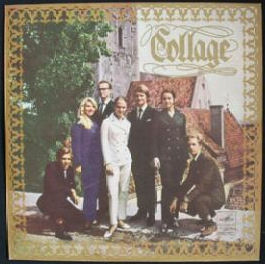
Collage

Here's a personal compilation of ultra-hip vocalese-jazz recordings by Estonian group Collage culled from their impossible-to-find Russian Melodiya albums from the seventies. Legendary stuff this, impossible to adequately put into words and incomparable in form & delivery to anything I can immediately think of. Try Estonian Novi Singers & you'll have some idea!

This seven-piece consists of three female vocalists who sound like angels and four male musicians. Together they perform an incredible combination of jazzy, classical folk tunes and whilst many of the songs have an ethereal hymnal quality, they all come together to forge a timeless and irresistable groove!

Absolutely essential...

1) Mets Neidude Vahel
2) Halb Sirp
3) Petis Peiu
4) Kee, Pada
5) Neiud Lähevad Ära
6) Uni, Tule Silma Peale!
7) Memme Vaev
8) Ehted Kadunud
9) Kodukingu Kuusik
10) Neiut Pole Kodus
11) Vastlalaul
12) Oh, Seda Õnnista Eluga
13) Bossanova Hing
14) Üheskoos

(Translations available on request)

Also, until further notice all download links will be within the comments for each individual post.

Rodolfo Alchourron

Rodolfo Alchourron - Sanata Y Clarificación Vol. 2 Prodisa 47005 (Arg) (1974)

Rodolfo Alchourron - composer, arranger, director and guitarist has built an enviable reputation in many areas including television, cinema and theatre as well as many sought after studio and concert recordings.

After having received notoriety with 'classic' compositional prizes he turned toward more popular music styles and attracted by the jazz he learned as an adolescent was instrumental in the formation of diverse trios & big bands in the sixties.

Between 1970 and 1974 his "Sanata Y Clarificación" emerged as the evolution of jazz-rock began to take hold. As a result of frequent incursions into his own tango and folk roots, and the increasing interest in those forms, Alchourron began replacing the wind instruments in his group with bandoneón and built a repertoire that was strongly influenced by elements of Argentine music.

In New York between 1978 and 1989, with "Southern Exposure", he composed numerous songs and instrumental pieces, combining in all of them elements of jazz and South American music.

This superb and collectible LP boasts many of his leading contemporaries including Ruben Barbieri, Bernardo Baraj, Chachi Ferreyra, Mario Tenreyro, Adalberto Cevasco, Osvaldo Lopez, Gustavo Beitelman, Raul Parentella and not forgetting Argentinean legend Litto Nebbia.

Jazzy, groovy, sinewy funky fusion grooves combine to create another lost classic, one that I humbly attempt to resurrect for you here.

1) Algunos Dias, Algunas Noches
2) No Se, No Se, Preguntare Para Saber
3) Vals Turnco
4) Esas Dos Cosas Benditas
5) Casi Un Tango
6) Cuzco Sucio y Molesto, Largo De Aqui
7) Vals En La Muy Sostenido

http://rapidshare.de/files/20004925/Rodolfo_Alchourron_-_Sanata_Y_Clarificaci_n_Vol._2__1974_.zip

NB. Please ammend the running order of the titles in the zip file - I mistakenly numbered them in alpha order when they should read as above.

Thursday, April 27, 2006

Irakitan

Trio Irakitan - Os Sambas Que Gostamos De Cantar Odeon MOFB-3010 (1964)

The original vocal set of Gilvan, João, Toni, Edinho, Odilon & Irakitan Brito aren't my favorite group by any means, concentrating on sedate bolero sambas and mariachi-style folk songs for the majority of their early years. However, syrupy romantic stylings aside, this LP is a true winner. Ultra-tight vocalese renditions of hits of the day with a crack backing section culminating in a handful of groovy & totally swinging tunes I'm sure you'll really dig! Their 'Moca' and 'Samba De Duas Notas' particularly memorable in my opinion.

1) Amor No Samba
2) Moca
3) Chorou, Chorou
4) So Danco O Samba
5) Estrada Do Sol
6) Garota De Ipanema
7) Amor A 120
8) Voce
9) Nao Fique Triste
10) O Barquinho
11) Samba De Duas Notas
12) Menina Flor

Wednesday, April 26, 2006

Temas Brasileños

Tete Montoliu - Temas Brasileños Ensayo ENY-303 (1974)

The outstanding Catalan jazz pianist, whose real name was Vicenç Montoliu i Massana was born blind in the Eixample district of Barcelona, and died in the same city. He was the only son of Vicenç Montoliu (a professional musician) and Àngela Massana, a jazz enthusiast, who encouraged her son to study piano and in 1944 engaged his piano teacher, Petri Palou. Before that, Montoliu had his first piano lessons with Enric Mas at the private school for blind children that he attended from 1939-1944 where he learned to read music in Braille.
From 1946 till 1953 he studied music at the Conservatori Superior de Música de Barcelona, where he met his first jam session fellows. Don Byas arrived in Barcelona in 1947 and introduced Tete to the Bebop style.

On March 13, 1956 he met the vibraphonist Lionel Hampton in a jam session in Barcelona. Montoliu toured with Hampton through Spain and France, had his first session as a leader in 1958 , and played with the touring Roland Kirk in 1963. Through the years, he also worked with such visiting Americans as Kenny Dorham, Dexter Gordon, Ben Webster, Lucky Thompson, and even Anthony Braxton.

On this LP, recorded in November 1973, of Brasilian themes he is joined by Alberto Moraleda on bass, Miguel Ángel Lizandra on drums and Pedro Díaz on percussion.

1) Generique-Manhã De Carnaval-Samba De Orfeu (From 'Black Orpheus')
2) Girl From Ipanema-Corcovado-Samba De Uma Nota So
3) Mulher Rendeira (Theme From 'O Canganceiro')-Bahía-Brasil
4) Canto De Ossanha-Ola-So Danço Samba
5) Desafinado-Meditaçao-Tristeza

Wednesday, April 19, 2006

Dancing Party

Various Artists - Dancing Party Odeon SMOBQ 9013 (Italy)

Here's an Italian library LP notable for some dreamy bossas in particular by Angel Pocho Gatti, who I have a soft spot for. No date given on the record but sounding like a late sixties/early seventies release.

Some premiere league Italian jazzmen are featured on this one playing a varied partly orchestral & beaty selection of tunes. Perhaps some more library LPs will be featured in the future should there be a demand.

1) Franck Pourcel - Je Reviens Te Chercher
2) N. Romano - Drums Blues
3) A. Pocho Gatti - Sentimental Bossa
4) Enrico Intra - Blues Per Noi (pt.1)
5) Pino Calvi - Tango For Brass
6) B. Pisano - For Scarlet
7) A. Pocho Gatti - Non Sei Mariu' Stasera
8) B. Pisano - Blue Ice
9) Pino Calvi - Blues For Brass
10) N. Romano - Blue Sunday
11) A. Pocho Gatti - Beautiful Day
12) Enrico Intra - Blues Per Noi (pt.2)


Tuesday, April 11, 2006

Come To Brasil...

Roberto Avila & Cachoeiras - Come To Brasil Plainis Phare CH-1267 (Swi) (1987)

Sorry for the the late update, I have just returned from Barcelona and am now renewed and ready for some special Easter shares.

Blogger has just wiped my not too inconsiderable introduction to this album and I don't really have the inclination at this time to repeat myself.

Don't let the year put you off with this one, it's a timeless classic and a real favorite I never tire of hearing. Guitarist and cavaquinho player Roberto Avila produces this sublime effort and whilst the title track & opener is a little commercial and probably the album's weakest tune the rest of it is an inspired listen and boasts some tremendously funky and jazzy tunes oozing grooviness and top class musicianship.

Swiss based Brasilian band Cachoeiras comprise Roger Blavia on percussion, drums & backing vocals, Ademir Candido on guitar, Eduardo "Dudu" Penz on superb form on electric bass, Paulo Menezes on percussion, Julinho Martins on keyboards, percussion & vocals, Marcelinho Martins on alto sax and female backing by Peggy Chew, Jackie Leite & Faffy Martins.

And who's that on flugelhorn? None other than Freddie Hubbard adding punctuation to a hitherto unknown but significant chapter in the history of Brasilian music. Who said music from the late eighties can't be groovy? No sir, not me...

1) Come To Brasil
2) Chorinho Prus Veio
3) Arara Sirio
4) Maybe You Know
5) Perto De Casa
6) Boca Do Mato
7) Samba Na Moita
8) Malvada
9) Baiao 171
10) Faffy Fofa

Sunday, April 02, 2006

Quinteplus

Quinteplus - Quinteplus EMI S-10055 (1972)

More jazz from Buenos Aires this time and a killer batch of funky instrumentals from Quinteplus. Drum beats, fat strident basslines awash with warm fender rhodes and tight horns. There's all-round virtuosity on this rare Argentine set that rewards the listener with repeated listening.

Joining tenor sax superstar Jorge Anders are Carlos "Pocho" Lapouble on drums, Santiago Giacobbe on electric piano, Gustavo Bergalli on trumpet and Jorge González on electric & contrabass.

1) Loberman, El Hombre Lobo
2) Los Ejes De Mi Carreta
3) Blackman, El Justiciero
4) El Marques 1° Parte-2° Parte-3° Parte
5) El Pasito De Nano
6) Zamba De Mis Pagos
7) La Vuelta Del Elefantor
8) Oda A Billy Joe

http://rapidshare.de/files/17007873/Quinteplus_-_Quinteplus__1972_.zip.html

Tuesday, March 28, 2006

Sambacana

Quarteto Sambacana - Muito Pra Frente Odeon MOFB 3443 (1965)

Milton Nascimento & Pacifico Mascarenhas (vocals); Geraldo Vespar (guitar); J.T. Meirelles (alto sax & flute); Tião Marinho (bass); Wilson das Neves (drums); Ubirajara Cabral (piano); Ed Maciel & Joao Luis (trombone); Mauricio (trumpet); Moacir Marques (tenor sax); J. Claudio (vibes) and others...

1) Tom Da Canção
2) O Vento Que Soprou
3) Até Você Voltar
4) Aladim
5) Era Um Dia Assim
6) Estrela Caindo
7) Eu E Você
8) Sem Me Olhar
9) Fui Olhar Pra Você
10) Mesmo Céu
11) Você É Muito Mais
12) Tarde Azul
13) Apareceu Na Tarde
14) O Navio E Você

A great bossa LP with divine vocal harmonizing led by composer Pacific Mascarenhas...

http://rapidshare.de/files/16618753/Quarteto_Sambacana_-_Muito_Pra_Frente__1965_.zip.html

Wednesday, March 22, 2006

Psiu!...

Marcos Samm - Psiu!... Polydor LPNG 44.049 (1970)

Events are conspiring against me so I'll keep this one short and sweet. A killer LP with lashings of groovy bossa beats.

Funky, jazzy and soulful in equal measure and provided by such luminaries as Erlon Chaves, Ivan Paulo, Antonio Adolfo and Nonato Buzar with arrangements by Roberto Menescal. Sold?

1) Beija-Me
2) Ela
3) Menina Esperança
4) Meu Lugar
5) Canto Puro Amor
6) Faço A Festa
7) De Encontro Ao Vento
8) Rosa-Maria
9) Blue
10) Alô Helô
11) Psiu!
12) Por Quê - Minha Namorada


http://rapidshare.de/files/16126833/Marcos_Samm_-_Psiu_...__1970_.zip.html

Friday, March 17, 2006

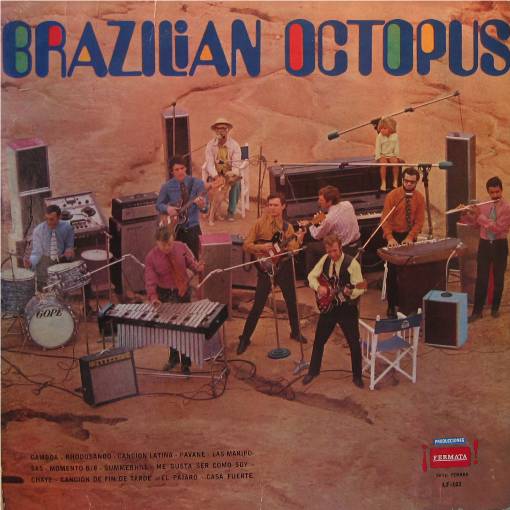
Brazilian Octopus

Brazilian Octopus - Brazilian Octopus Fermata SFB-257 (LF-163) (1969)

Picture a band that features musicians from schools so different as the multi-instrumentalist Hermeto Pascoal, the post-tropicalist guitar hero Lanny Gordin, bossa nova pianist Cido Bianchi (former Milton Banana Trio), acoustic guitarist Olmir 'Alemão' Stocker and jazz bassist Nilson da Matta. The surprising meeting happened in 1968 and helped write a little known chapter in the history of instrumental music in Brazil called Brazilian Octopus, whose only release is hunted by record collectors. "This is undoubtedly the strangest Brazilian group ever", writes Marcelo Dolabela in his dictionary ABZ do Rock Brasileiro (printed on Estrela do Sul, 1987). "At that time, we didn't care about the money, we just wanted to play. It was a wonderful experience", recalls Celso Bianchi, also a maestro and arranger.

Brazilian Octopus was lined up in São Paulo in the beginning of 1968 by Lívio Rangan, manager of a textile factory that promoted musical fashion shows to promote their products. "Lívio used to like me a lot. He even claimed he was gonna turn me into the new Sergio Mendes", tells the musician, appointed by Rangan as the group's coordinator. In fact, Brazilian Octopus was born with uncommon space in the market: a contract for a year of work that included three months of rehearsals during which the musicians received salaries. At that time, the band also recorded an album with Japanese saxophonist Sadao Watanabe.

'Gigs In A Cage'
The music director of the shows was the tropicalist maestro Rogério Duprat. Gilberto Gil, Caetano Veloso and Eliana Pittman also participated. "I dressed up in a lion costume in many of those shows. The whole group dressed up in animal costumes and played inside a cage", Hermeto recalls. Despite their very different backgrounds, the members knew one another because they all hung out in the same venues, specially the nightclub Stardust (managed by Lanny's father), where Hermeto, Bianchi and Alemão often performed. "I remember that we were rehearsing when the news was broken that guitarist Wes Montgomery had passed away", says Alemão. "As usual, there were little quarrels", claims the saxophonist Carlos Alberto, noticing that the "incompatibility of ideas" was frequent within the group, especially when it was time to choose the set list. It was different when, after a few months into rehearsals, the event manager suggested that the group make an album. "Lívio Rangan thought that we could insert a number of radio-friendly songs into the disc", recalls Alemão, who was in charge of contacting songwriters with whom he had worked before. "I gathered a number of unreleased songs which were refused by Cido Bianchi, who was more interested in playing jazz. One of them was Jorge Ben's País Tropical", teases the guitarist.

"Even when we had to play French or Italian songs that were part of the factory's repertoire, we always did it with dignity. That work influenced many of the things that I do today. That's why I reckon music is universal. Everybody is influenced by everybody else", says Hermeto, who was responsible for coordinating collective arrangements after a few misunderstandings popped up among the musicians. He also wrote two themes featured in this very rare LP : Rhodosando and Chayê, which were pop and Cuban cha-cha-cha fusions. "I got inspiration from the fashion models to write those songs. I already played nightclubs, then, so I could play many different styles", remembers the musician from Alagoas.

'Unexpected Extras On The Cover'
Other members also contributed with original compositions: Alemão (Canção Latina, written with Vitor Martins), vibraphone player João Carlos Pegoraro (Summerhill) and Lanny (O Pássaro). The recording of the latter provoked an argument between Hermeto and the sound technicians. "Due to the song's repetitive melody, he wrote the counterpoint to be played by two flutes, just to liven it up a bit. But when he heard the mixed track, the counterpoint had vanished. Hermeto was so furious that he wanted to beat the technician up ", laughs saxophonist Carlos Alberto, who also recalls that Pascoal does not appear on the cover of the album because he couldn't make it to the photo shooting. A clerk from an advertising agency sat by the piano, instead - as well as an old timer, a dog and a child, who had nothing to do with the making of the album, but appeared on the cover. The shooting took place on a piece of land that looked like the surface of the moon - a reference to the space race between the USA and former USSR.

Produced by Mário Albanese and Fausto Canova, the album Brazilian Octopus features new arrangements for Casa Forte (Edu Lobo), Pavane (Gabriel Fauré), Canção de Fim de Tarde (Walter Santos and Thereza Souza), Gosto de Ser Como Sou and Gamboa (Mário Albanese and Ciro Pereira), exploring a characteristic sound yielded by the flutes with the vibraphone, organ and guitars. "We never received a penny for that LP. It seems that it was released in Europe, even enjoying a little success", says Carlos Alberto, who claims that the members of the band tried to talk to Fermata's CEOs and get to know about the sales. Instead of checks, all they got was laudatory comments and an invitation to make a new album. Figuring that they would not get any money from it, they turned it down. The octet ended right there and then.

1) Gamboa
2) Rhodosando
3) Canção Latina
4) Pavane
5) As Borboletas
6) Momento B/8
7) Summerhill
8) Gosto De Ser Como Sou
9) Chayê
10) Canção De Fim De Tarde
11) O Pássaro
12) Casa Forte


http://rapidshare.de/files/15711865/Brazilian_Octopus_-_Brazilian_Octopus__1969_.zip.html

Monday, March 13, 2006

São Paulo Jazz Funk

Banda Metalurgia - Banda Metalurgia Som Da Gente SD-6013 (1982)

Formed in 1980 and led by Trombonista Itacyr Bocato, this wonderful Brasilian jazz funk bomb boasts many great tunes. Slick jazzy rhythms set to a tight São Paulo horn section, very much akin to the more well-known Banda Black Rio and critically acclaimed on first release.

With Bocato on trombone are Lino Simão, Jacare & Julio Peluchi on saxophones, Nonô Camargo & Claudio Faria on trumpets, Mané Leao on piano, Marcelo Munari on guitar, Edu Fiore on bass and Claudinho on drums.

1) Multinacional
2) Amarelo
3) Impulso
4) Oi
5) Ap. 403
6) Barra Pesada
7) Lá Em Guayaquil
8) Ermelindo E Casanova
9) A Salsa E O Cheiro Verde
10) Esperando Edmundo
11) Em Tempo De Baeta
12) Samba Da Volta Ao Bernô

Tuesday, March 07, 2006

Zimbo!

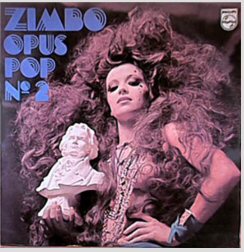
Zimbo Trio - Opus Pop Nº 2 Philips 6349 080 (1973)

Formed in 1964 in São Paulo by classically trained pianist Amilton Godoy, bassist/composer/orchestrator Luís Chaves, and drummer Rubinho (Rubens Barsotti).

They performed for the first time under the name of Zimbo Trio at Oásis nightclub in São Paulo, accompanying the famous actress and novice singer Norma Benguel in a show directed by Aluísio de Oliveira.

In 1965, the trio travelled to Lima and Buenos Aires, and it was at the festival of Mar del Plata, Argentina, they received the Cancioneiro das Américas award. They were then hired to perform regularly on the TV show 'O Fino da Bossa', produced by Elis Regina and Jair Rodrigues. The Zimbo Trio received awards for best soundtrack for the movies Noite Vazia (1965, Walter Hugo Khoury) and A Margem, (1967, Ozualdo Candeias).

In 1972, they toured Portugal and Spain with Elizete Cardoso. Accompanying the Brazilian singer Sílvia Maria on Adilson's "Heróica," The Zimbo Trio was awarded first prize at the Festival de Onda Nueva, Caracas, Venezuela. Since 1973 the trio has been in charge of the Centro Livre de Aprendizagem Musical (Free Center for Musical Studies), an entity dedicated to the teaching of a wide spectrum of musical styles.

With a career spanning 40 years, and more than 40 albums, including guest appearances, Zimbo Trio’s line-up has remained unchanged since its inception.

Although some of their LPs are quite pedestrian, they are true exponents of the bossa form and could even turn their hands to more progressive & funky fusion offerings. This album is pretty disimilar to that Zimbo sound boasting haunting renditions of Bach or Chopin classics turned inside-out into hip bossa grooves. Fans of wordless female vocals and dreamy scatting won't be disappointed.

1) Sevilla
2) Festa No Sertão
3) Wachet Auf Ruff Uns Die Stimme
4) Prelúdio
5) La Danse d'Anitra
6) Playera
7) Sicilienne
8) Largo
9) Narcisos


http://rapidshare.de/files/14902903/Zimbo_Trio_-_Opus_Pop_N__2__1973_.zip.html